Lighting and window treatments offer one of the easiest ways to bring meaningful automation into a home. Beyond the novelty of controlling lights from a phone, smart lighting and automated shades deliver real daily convenience, better comfort, and the potential to use less energy. This guide walks through the practical options, how they work together, and what to consider before you start.
Understanding Smart Bulbs, Switches, and Dimmers
Smart bulbs are the simplest starting point. They screw into existing sockets and let you adjust brightness, color temperature, or schedules through an app or voice control. Smart switches and dimmers replace traditional wall controls and often feel more natural because everyone in the house can still use the wall switch. Occupancy and motion sensors add another layer by turning lights on when someone enters a room and off when the space is empty.
Each option has trade-offs. Bulbs are easy to install but can be forgotten when guests use a regular switch. Switches and dimmers usually require a neutral wire in the electrical box and may need professional installation in older homes. Sensors work best when placed thoughtfully so they detect real movement without false triggers.
Have you tried smart bulbs yet, or are you considering wall switches instead? Does your home have neutral wires in the switch boxes?
How Automated Shades Improve Comfort and Efficiency
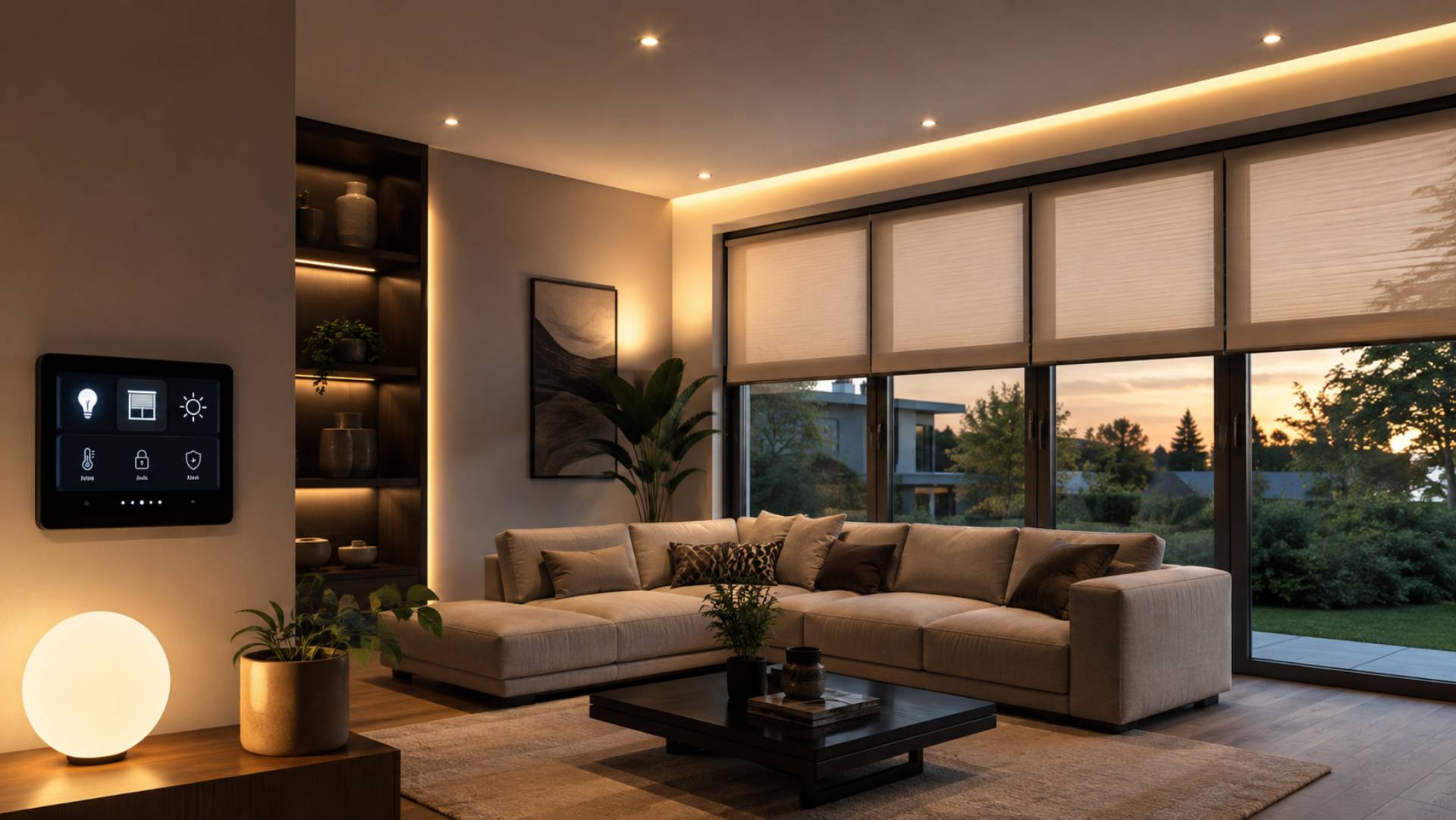
Automated shades and blinds respond to time of day, sunlight, or temperature. They can lower in the afternoon to block heat and glare, then rise in the evening to let in the last natural light. Many systems integrate with the same app or hub that controls your lights, creating coordinated scenes for morning, work, or bedtime.
Motorized shades reduce the need to constantly adjust window treatments by hand. In sunny rooms they help keep indoor temperatures more stable, which can ease the load on your cooling system. For accessibility, automated shades allow people with limited mobility to control light and privacy without reaching high windows.
Which rooms in your home get the most direct sun during the day? Would automated shades make those spaces more comfortable?
Scheduling, Daylight Response, and Occupancy Detection
The real value appears when lighting and shades work on schedules and sensors instead of constant manual control. You can set exterior lights to turn on at sunset, kitchen lights to brighten during cooking hours, and bedroom lights to gradually dim before sleep. Daylight sensors adjust indoor lighting based on how much natural light is already available. Occupancy detection keeps lights off in empty rooms.
These features reduce wasted energy without requiring anyone to remember to flip switches. Scenes let you create one-touch settings—for example, “Movie Night” that dims the lights and closes the shades, or “Good Morning” that raises shades and turns on soft lights.
What daily routines could benefit from automated lighting scenes? Do you often leave lights on in empty rooms?
Practical Examples Around the Home
In entryways, motion-activated lights provide safe illumination when you arrive with full hands. Kitchens benefit from bright task lighting that activates while cooking and softer ambient light for other times. Bedrooms can use warm, dimmable lights and shades that open slowly in the morning. Workspaces gain consistent light levels that reduce eye strain. Exterior lighting can follow sunset schedules and turn on when motion is detected near doors or paths.
Accessibility-focused homes often gain the most. Voice control, app control, and automated shades remove physical barriers and give residents greater independence. Even small upgrades in high-use areas create a noticeable improvement in daily comfort.
Which area of your home would you automate first? Have you considered how lighting could support accessibility needs?
Compatibility, Installation, and When to Call a Professional
Not every fixture or switch box works with every smart product. Some switches need a neutral wire. Certain dimmers only work with specific bulb types. Wi-Fi bulbs are simple but can crowd your network, while systems that use a hub often respond faster and more reliably. Always check compatibility before buying.
Basic smart bulbs can be installed by most homeowners. Replacing switches, adding sensors that require wiring, or installing motorized shades often benefits from a qualified electrician or experienced installer. Electrical work that involves the main panel or complex multi-way switches should always be handled by a professional for safety and code compliance.
Do you know whether your switch boxes contain neutral wires? Are you comfortable installing switches yourself or would you prefer professional help?
Affordable Upgrades Versus Full Lighting-Control Systems
You can begin with a few smart bulbs and one or two automated shades for a modest investment. These deliver immediate convenience and let you test what you actually use. A professionally designed lighting-control system costs more but offers seamless integration, reliable performance, and a cleaner look with keypads instead of multiple apps.
Most households do well starting small and expanding only where the benefits are clear. Focus on the rooms you use most and the tasks that currently frustrate you. Over time you can add sensors, more shades, and refined scenes without replacing everything at once.
Would you rather start with a few affordable smart bulbs or invest in a more complete system? Which rooms justify the higher cost of professional installation?
Frequently Asked Questions (FAQs)
Do I need a hub for smart lighting?
Not always. Many smart bulbs and switches work directly over Wi-Fi. A hub often improves speed, reliability, and the ability to connect different brands in one system.
Will smart switches work in my older home?
It depends on whether the switch boxes have a neutral wire. Many older homes lack them. Some smart switches are designed for no-neutral installations, but an electrician can confirm what will work safely.
Can automated shades really help with energy use?
Yes. By blocking intense sun in summer and allowing sunlight in during winter, automated shades help stabilize indoor temperatures and can reduce heating and cooling demand.
Are smart lights secure?
Choose reputable brands that offer regular security updates and strong account protection. Using a separate network for smart devices adds another layer of safety.
What happens during a power outage or internet outage?
Most smart switches still function as regular switches. Bulbs and shades may lose remote control until power or internet returns, but manual operation usually remains possible.
How do I choose between smart bulbs and smart switches?
Use bulbs when you want color options or temporary upgrades. Choose switches when you want reliable wall control that works for everyone in the household without opening an app.
Conclusion
Smart lighting and automated shades turn ordinary rooms into more responsive, comfortable spaces. Starting with the areas you use most—entryways, kitchens, bedrooms, or sunny living rooms—delivers practical benefits without requiring a full-home overhaul. Pay attention to compatibility, decide where professional installation makes sense, and build scenes and schedules that match your actual routines. The result is a home that feels more convenient, uses energy more thoughtfully, and adapts to the people who live there.